T1 Transit Procedure: Your Transit from Port to Destination, Fully Handled
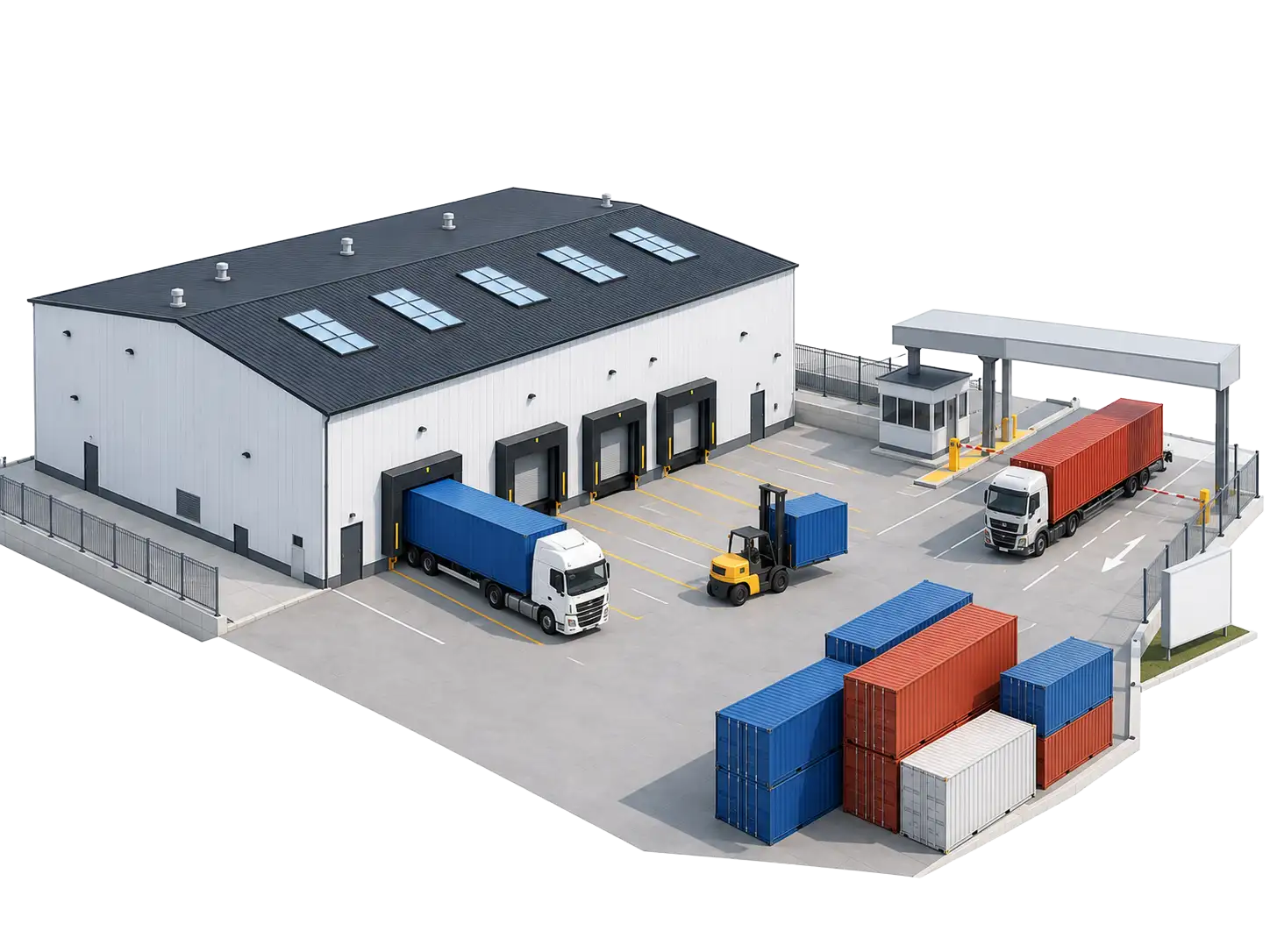
The T1 transit procedure is the customs procedure by which uncleared goods are transported under customs supervision from one customs office to another without customs duties and import VAT becoming due at the port of entry. At Mönig, we handle this part completely: We review your shipment data, initiate the procedure electronically, provide the required security from our own comprehensive guarantee, manage communication with the customs offices involved, and monitor the process until proper completion. As an authorized consignor and authorized consignee, we initiate and conclude transit procedures in-house. You need neither your own customs department nor your own guarantee. You need a power of attorney, complete shipment data, and a contact person who knows where your goods are at any given time.
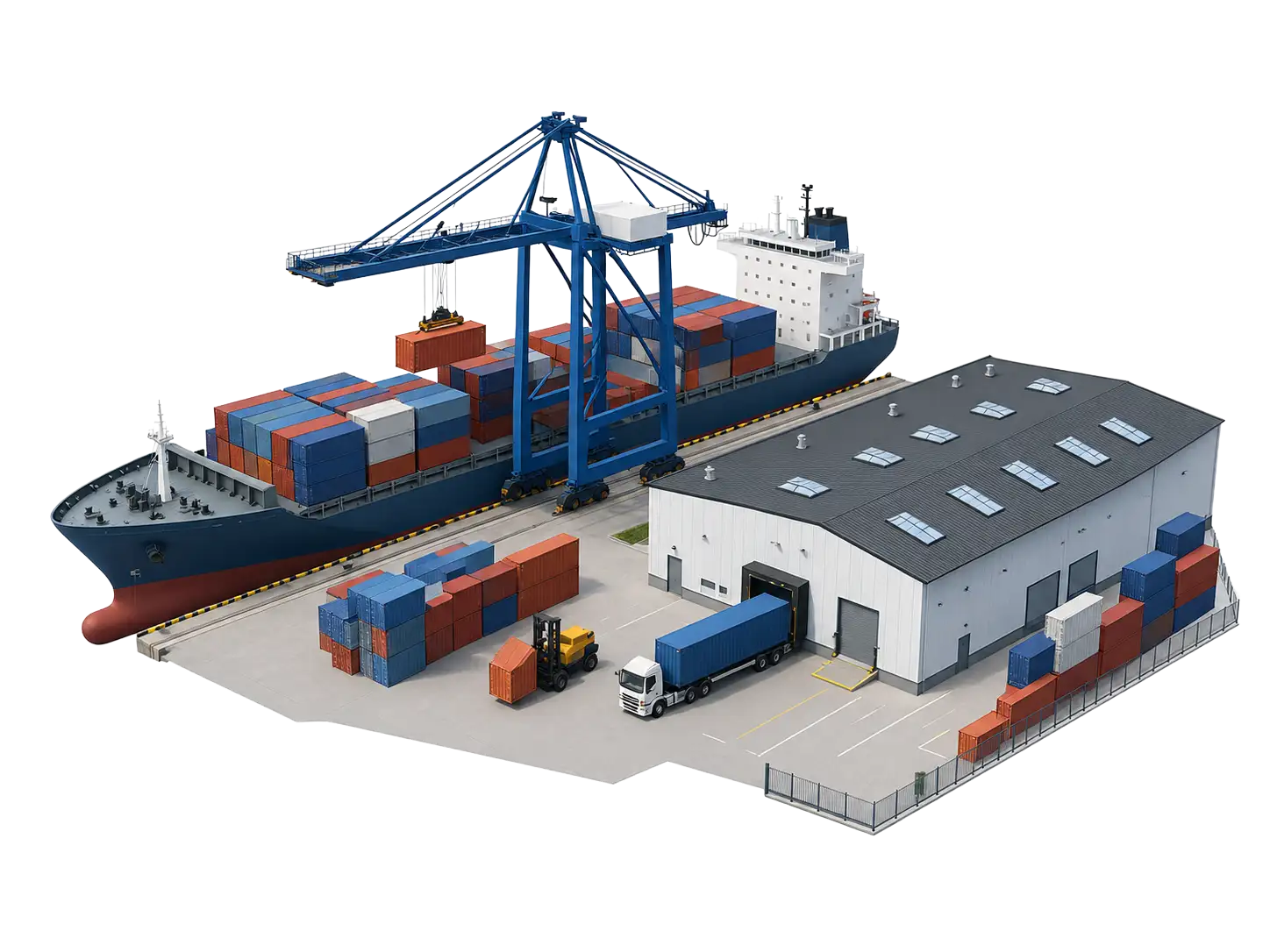
In 2025, German seaports handled 15.0 million TEU, 12.4 percent more than the previous year, with 3.0 million TEU in trade with China alone (Federal Statistical Office). A large portion of these containers is not to be cleared at the port of arrival, but rather where the goods are needed. This is precisely the gap the transit procedure fills.
What We Handle in Your Transit Procedure
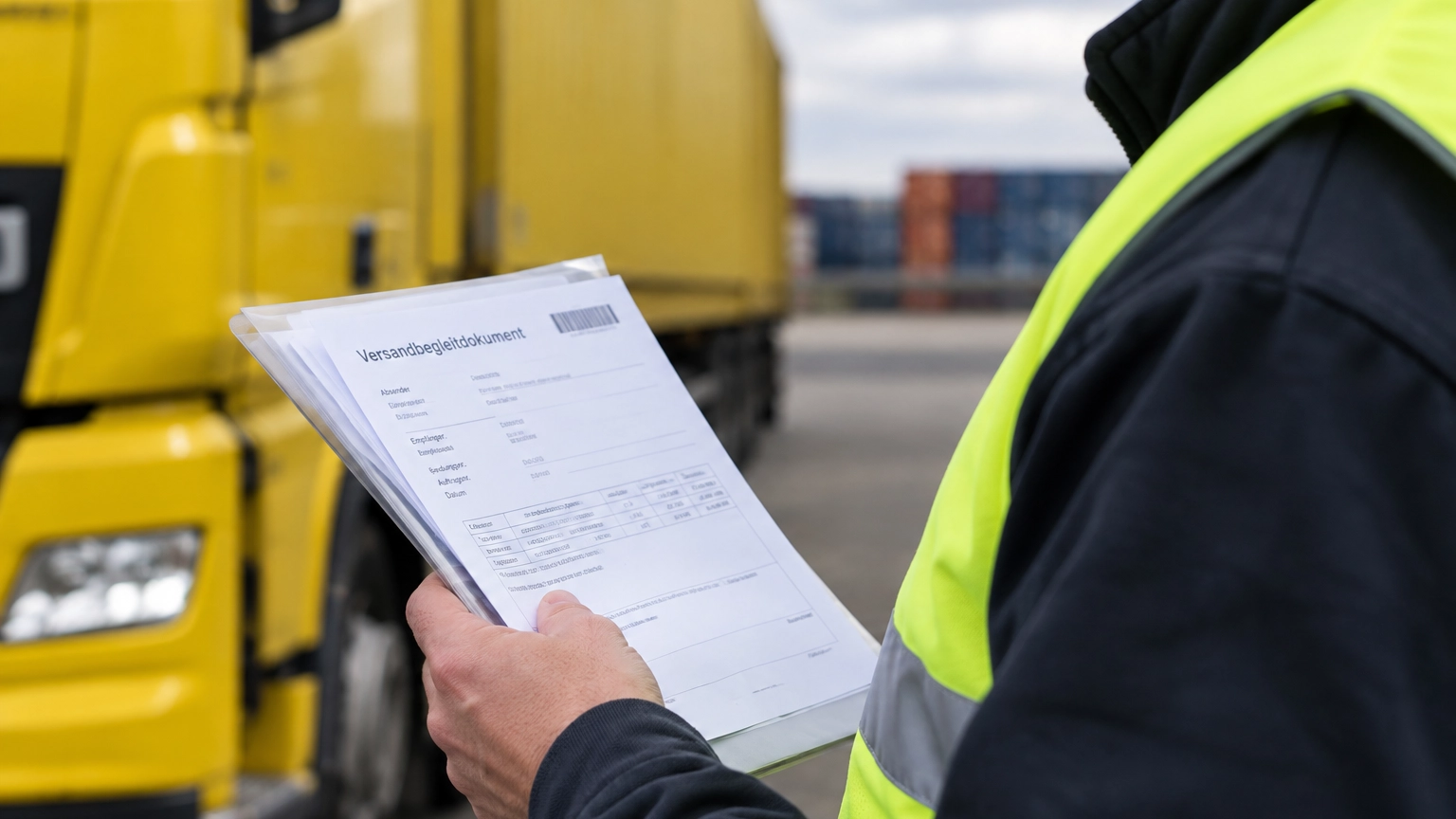
Documents we need from you
- Power of attorney, provided by us, completed and signed
- Shipment data: invoice details, goods description, number of packages, and weights
- Transport and arrival information, such as vessel or flight data and port of arrival
- Customs office of destination, or the location where clearance is to take place
- Existing customs information, such as tariff codes or documents from a previous procedure
Steps we take care of
How Your T1 Transit Procedure Works
01
Inquiry and power of attorney
You describe the shipment, port of arrival, and desired location of clearance to us; we provide the power of attorney.
02
Review of Shipment Data
We review invoice, goods description, and transport data, ideally before the vessel docks.
03
Initiation via NCTS
The transit declaration runs electronically via NCTS, the common IT standard for transit procedures, in our case via Dakosy customs software. At the same time, we lodge the security.
04
Transport Under Customs Supervision
The goods travel with the transit accompanying document to the destination. Until then, they remain uncleared; import duties are not yet due.
05
Presentation and Completion
At the destination, the goods are presented, the procedure is concluded, and then completed. Only after that does clearance follow, where you need it.
Two authorizations make this process leaner: As an authorized consignor, we can place goods under the transit procedure from authorized premises without first presenting them at the customs office of departure. As an authorized consignee , we receive the shipment at our authorized premises in Meschede instead of presenting it at the customs office of destination. This saves journeys, waiting time, and an appointment. Both authorizations apply to the Union transit procedure as well as the common transit procedure. In addition, we hold AEO-C authorization for customs simplifications and participate in ATLAS.
T1, T2, or T2L: Which Procedure Applies to Your Goods?
The choice of procedure determines whether your shipment passes through the border or is held up. The distinction is quickly explained:
- T1 is the external transit procedure for non-Union goods, i.e., uncleared third-country goods. This is the standard case for overseas shipments transported onward from the port.
- T2 is the internal transit procedure for Union goods transported through a third territory and intended to retain their Union status.
- T2L is strictly speaking not a transit procedure, but proof of the Union status of goods. We also issue this proof when needed, though in practice this occurs only rarely.
Important for your routes: Within the EU, the Union transit procedure applies; beyond that, the common transit procedure. Contracting parties include, in addition to EU member states, Switzerland, the United Kingdom, Turkey, Serbia, Montenegro, Ukraine, Norway, and Iceland—precisely the region where we operate daily. A typical scenario from our day-to-day business: transit to Switzerland and via Switzerland when a shipment is headed to Italy.
Security and Non-Completion: The Two Risks We Absorb
We Provide the Comprehensive Guarantee
The most common concern of our transit customers is not the document, but the liability. As long as goods are in transit uncleared, customs duties and import VAT stand as a potential customs debt, and customs requires security for this. We provide it for you. The most common form is the comprehensive guarantee as a written undertaking. Unlike an individual guarantee, it covers multiple procedures within a reference amount, and under certain conditions it can be reduced to 50 or 30 percent of that amount. For you, this means: no guarantee of your own, no tied-up capital. This also applies when we do not handle the transport ourselves. From your side, a signature on the written undertaking is sufficient.
When a Procedure Is Not Properly Completed
If the arrival notification is missing, it becomes unpleasant, with fixed deadlines. Customs then initiates an inquiry procedure . The customs office of destination and the procedure holder must respond within 28 days, and at the latest seven months after expiry of the presentation deadline, the recovery procedure is initiated. The end result is then a demand for payment.
A case from our practice: For a shipment of alcohol under T1, the procedure was not properly concluded. This threatened further customs inquiries and a possible demand for payment. We reviewed the case, compiled the required evidence, and handled communication with the relevant authorities. Because the documents were complete, the case could be resolved and the open procedure cleared. For excise goods such as spirits, wine, and beer, our Excise warehouse with EMCS connection also applies. The earlier you report a discrepancy to us, the greater the room for maneuver. We cannot promise that every inquiry will be without consequences, and the decision is made by the customs authority in any case.
Import, export, and transit: customs from a single source
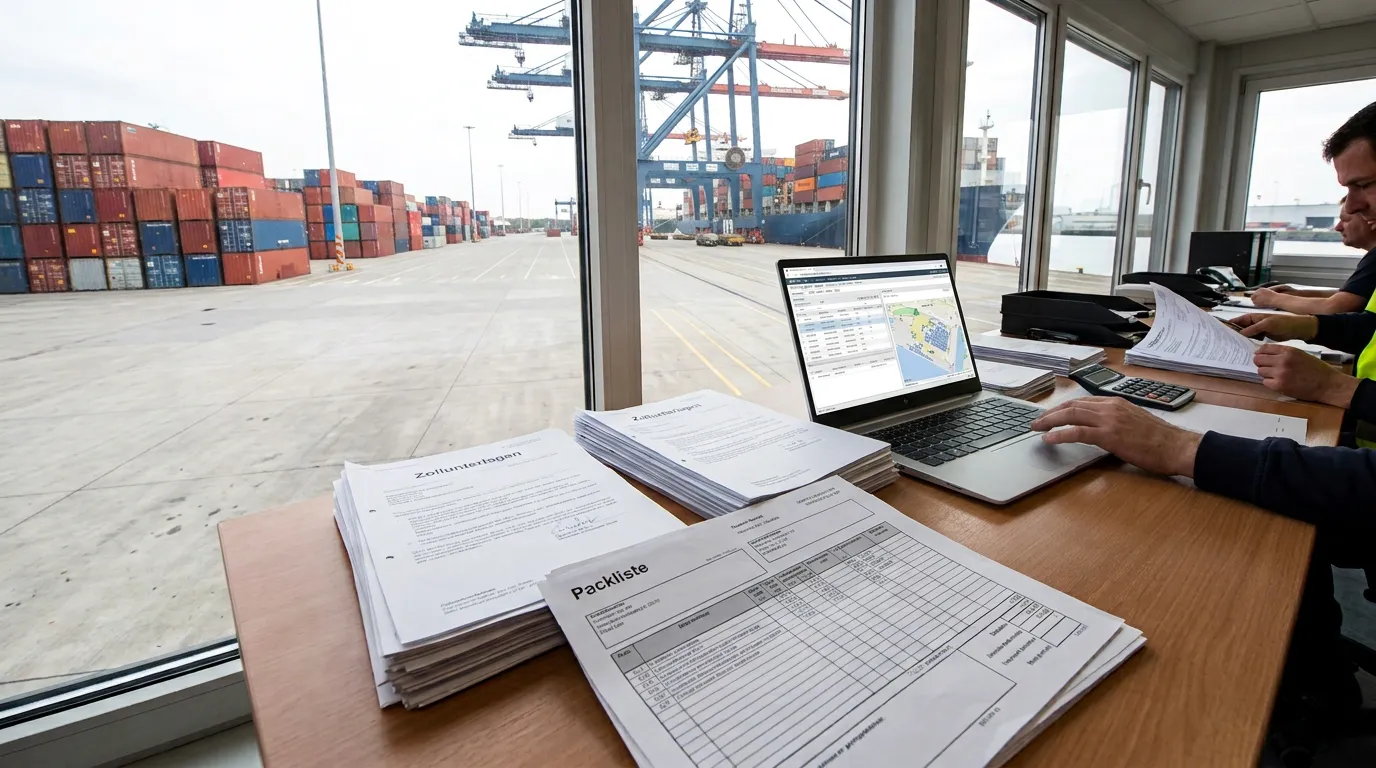
Transit is rarely of interest on its own; it is almost always linked to an import. That is precisely where our advantage lies: Import processing with import declaration and import duties, the export declaration for your export, and the transit procedure are all handled in the same department at our company, with the same contact persons and the same systems. An overview of all customs procedures can be found on our page on customs services. The most common reason for a T1 arises in our transport business anyway: when we organize pre-carriage, port pickup, or onward carriage for you and the goods are not to be cleared at the port of entry.
Because customs, transport, and warehousing are under the same roof, the interfaces where information is otherwise lost are eliminated. Overseas shipments run via our ocean freight, time-critical or land-based routes via air and rail freight. If the goods are not to move on immediately after completion, our warehouse logistics handles storage.
Where our service ends, we tell you in advance:
- Missing documents: we do not obtain them from your supplier.
- Product regulations outside customs law: we do not assess them.
- Customs decisions: made by the authorities, not by us.
- Delays due to incomplete information from your side: we cannot absorb them.
- The transport itself: only included if you commission it as a transport service.
Why Mönig for Your Transit Procedure?
- Transit procedure and transport from a single source: one contact person, fewer interfaces, fewer sources of error.
- Authorized consignor and consignee: We initiate and conclude procedures in-house, without detour via the customs office.
- Own comprehensive guarantee: You do not need to provide your own security. Own customs department: three customs declarants in Meschede, professionally led by Olga
- In-house customs department: three customs declarants in Meschede, professionally led by Olga Berch, certified customs specialist (Hamburg Customs Academy) with over eight years of customs experience. The Bielefeld main customs office is responsible.
- Proven qualifications: AEO-C authorization, ATLAS participation via Dakosy, and annual IHK training certificates for the customs team.
- Confidentiality as a principle: Your documents stay in-house. We do not pass anything on to third parties who are not involved in the process.
- Established company: Mönig has existed since 1957, today with over 170 employees.
Your Transit in Experienced Hands
A transit procedure at Mönig means: You provide the power of attorney and shipment data; we handle initiation, security, communication with authorities, and monitoring until completion. Behind this are the authorizations as authorized consignor and consignee, our own customs department, and a company that has integrated transport, warehousing, and customs since 1957. And because we do not just issue a transit document but accompany the entire process, you do not need to keep track of the procedure yourself.
Describe your shipment to us with port of arrival, type of goods, and desired location of clearance; we will get back to you with a concrete proposal.
Frequently Asked Questions About the Transit Procedure
When Do I Need a Transit Procedure (T1)?
Whenever uncleared goods are to be transported onward within the customs territory without being cleared at the port of entry. This is typical for overseas shipments that move from the port to another customs office or directly to your location. Clearance then takes place flexibly at the desired location.
What Is NCTS?
NCTS stands for New Computerised Transit System and is the common IT standard in which all EU member states and the contracting parties of the common transit procedure program their transit applications. Transit declarations are transmitted electronically via this system and procedures are monitored. We are authorized participants and submit declarations via Dakosy customs software.
What Is a T1 Document and Who Creates It?
The T1 document, correctly called the transit accompanying document, is created when the transit procedure is initiated and accompanies the shipment to the customs office of destination. It identifies the goods as uncleared and under customs supervision. It is created by the person who initiates the procedure—in your case, by us.
What Is the Difference Between T1 and T2?
The T1 customs procedure applies to uncleared third-country goods transported under customs supervision before clearance takes place. The T2 transit procedure is used for goods with Union status that are, for example, transported through a non-EU territory and whose Union status is to be retained and proven.
What Happens If the Transit Procedure Is Not Properly Completed?
Customs initiates an inquiry procedure in which the customs office of destination and the procedure holder must respond within 28 days. If proof is not provided, the recovery procedure follows with a demand for payment. We review the case, coordinate with the customs offices, and assist in obtaining missing evidence.
How confidentially do you treat our documents?
All documents you provide to us for customs processing are treated confidentially by Mönig and are not passed on to uninvolved third parties. Only the information required by the customs offices involved for the transit procedure is transmitted. Invoice values, consignee data, and goods information remain with the staff handling your case.
Contact us for more information

Contact person:
Olga Berch