Less-than-Truckload (LTL) – Smartly consolidate freight; reliable transport starting at 7 pallets
A less-than-truckload (LTL) shipment is a shipment that does not fill an entire truck on its own and therefore shares the cargo space with other shipments. This is exactly where we come in: We consolidate your freight—whether individual pallets, machine components, or regularly recurring shipments—with other shipments and deliver them cost-effectively and on time to their destination. Through sophisticated scheduling and a Europe-wide network of partners, we transport your less-than-truckload shipments both domestically and across borders. At Mönig, a less-than-truckload shipment starts at 7 pallets. You pay only for the cargo space you actually need and have a dedicated contact person who knows your shipment—personalized service, predictable handling.
What is a less-than-truckload (LTL) shipment?
With a less-than-truckload (LTL) shipment, your goods do not fill the truck completely. The remaining cargo space is shared with shipments from other shippers—hence the term LTL, “Less than Truckload.” A less-than-truckload shipment is therefore larger than a single general cargo shipment but smaller than a full truckload, in which a vehicle is dedicated solely to your goods.
A less-than-truckload (LTL) shipment is ideal when your shipment size falls between these two extremes: too large for the traditional general cargo network, but too small to book an entire truck. You share the shipping costs instead of paying for empty cargo space. In Germany, approximately 2.8 billion metric tons of goods are transported by truck each year (domestic trucks, Federal Statistical Office) – a large portion of which consists of quantities for which partial loads are the most economical option.
The Benefits of Less-than-Truckload Shipping with Mönig
The biggest factor affecting a less-than-truckload shipment is load utilization. By consolidating shipments, you fill the cargo space more completely—which reduces costs and CO₂ emissions per pallet transported, because the cost of a single trip is shared among multiple shippers. Specifically, this means for you:
- Optimized shipping costs: You share the cargo space and pay only your share.
- Short transit times: well-planned scheduling and direct routes without unnecessary transshipment
- Transparent shipment tracking: You can see where your goods are and know exactly where you stand.
- High level of planning reliability: established processes and a single point of contact who understands your needs.
These benefits are part of a promise we’ve been keeping for over 70 years: logistics that just work. Your less-than-truckload shipment is part of our Transportation Logistics and thus integrated into a comprehensive service package covering transportation, warehousing, and customs—all from a single source.
General cargo, less-than-truckload, or full truckload—when to use which?
The right mode of transportation depends primarily on the size of the shipment. Here’s an overview of the three most common options:
- General cargo: Individual, smaller shipments. They are transported via transshipment networks and are typically transshipped multiple times.
- Less-than-truckload (LTL): With Mönig, orders of 7 pallets or more. The cargo space is shared with just a few other shipments, and your goods are transported as directly as possible, without unnecessary handling.
- Full Truckload (FTL): A full truckload for a single shipper. The goods are transported exclusively and directly from A to B.
The line is blurred, and not every freight forwarder draws it in the same place. We quote for less-than-truckload shipments starting at 7 pallets—based on our experience, this is the point at which consolidating shipments becomes noticeably cheaper and faster than handling them as individual pieces. We’ll work with you in advance to determine which option makes the most sense for your shipment.
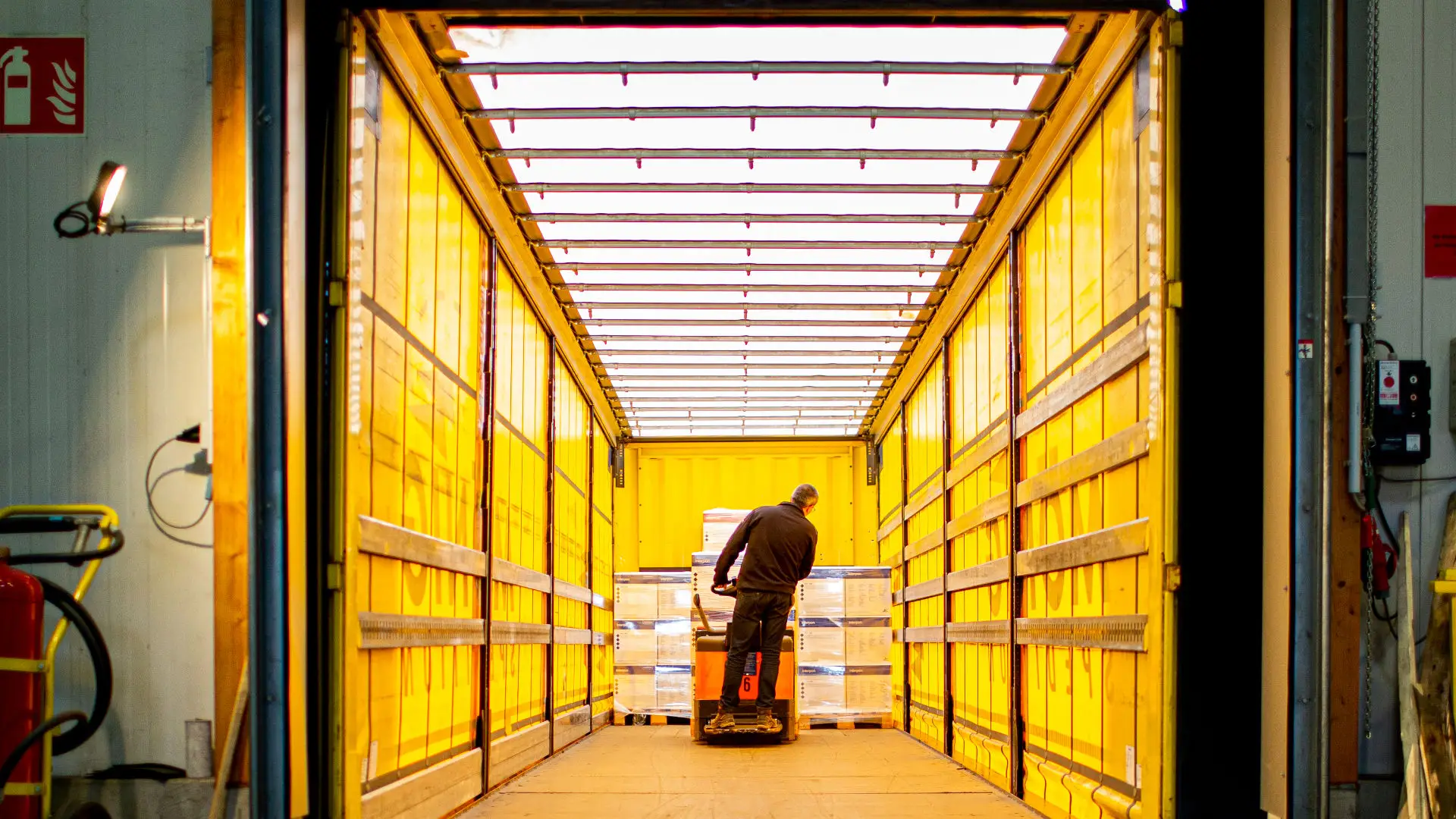
Less-than-truckload shipments throughout Europe – international export services from a single source
For us, less-than-truckload shipments don’t end at the border. Through our Europe-wide less-than-truckload services, we reliably transport your shipments abroad—coordinated with a proven network of international partners and delivered on time to the recipient.
When it comes to exporting, it’s not just about transportation—it’s also about the paperwork involved. We take care of the Customs clearance and the preparation of the necessary documents so that your less-than-truckload shipment crosses the border without delay. Whether you have regular shipments or short-notice individual orders, you’ll receive a flexible transportation solution with personalized support—a single point of contact for both transportation and paperwork, rather than multiple points of contact.
Here's how your less-than-truckload shipment is handled at Mönig
So you know what to expect, we’re laying out the process:
01
Inquiry & advice
You tell us the quantity, destination, and deadline. We’ll determine whether a less-than-truckload shipment is the right option and get back to you with a specific proposal.
02
Scheduling & Consolidation
We schedule your shipment on a suitable route and efficiently consolidate it with other less-than-truckload shipments.
03
Transport in the Network
Using our own fleet and a Europe-wide network of partners, we get the goods on the road—as directly as possible, with as little handling as necessary.
04
Notices & Delivery
You can track the status of your shipment, and we’ll deliver it to the recipient on time.
When you have warehousing or transshipment needs, our warehouse logistics work together seamlessly—all from a single source.
Request a Less-than-Truckload Shipment – Reliable, Affordable, and With Personalized Service
Frequently Asked Questions About Bulk Material Transport
What does LTL stand for?
LTL stands for “Less than Truckload” and is the English term for a partial load. This refers to a shipment that does not fill an entire truck and therefore shares the cargo space with other shipments. In this way, multiple shippers use the same transport and share the costs.
At what point is a shipment considered a less-than-truckload shipment?
At Mönig, we quote for less-than-truckload shipments starting at 7 pallets. For shipments smaller than that, general cargo handling is generally more practical; for larger shipments, consolidating them into a less-than-truckload shipment is more cost-effective. The exact threshold also depends on weight and dimensions—we’ll review each case individually and recommend the most cost-effective option for you.
What is the difference between a less-than-truckload shipment and general cargo?
General cargo consists of smaller individual shipments that pass through transshipment networks and are reloaded multiple times along the way. A less-than-truckload (LTL) shipment is larger, shares the cargo space with only a few other shipments, and travels as directly as possible—with fewer transshipments. This often shortens transit time and protects the goods.
How much does a less-than-truckload shipment cost?
The price of a less-than-truckload shipment depends on the quantity, weight, distance, and delivery date—it would be misleading to provide flat-rate estimates. Since you’re sharing the cargo space, you pay only for your share and not for the entire truck. Provide us with your key details, and we’ll give you a specific, transparent quote.
Do you also transport less-than-truckload shipments to other European countries?
Yes. Through Europe-wide less-than-truckload (LTL) shipments and a network of international partners, we reliably transport your less-than-truckload shipment abroad. We also handle the necessary customs clearance and transport documents so that your shipment crosses the border without unnecessary delays.
Can I track my less-than-truckload shipment?
Yes. You’ll receive transparent shipment tracking and know exactly where your goods are. If you have any questions, you’ll be able to reach a dedicated contact person who is familiar with your order—instead of an anonymous hold line.
Contact us for more information

Contact person:
Alexander Schulz